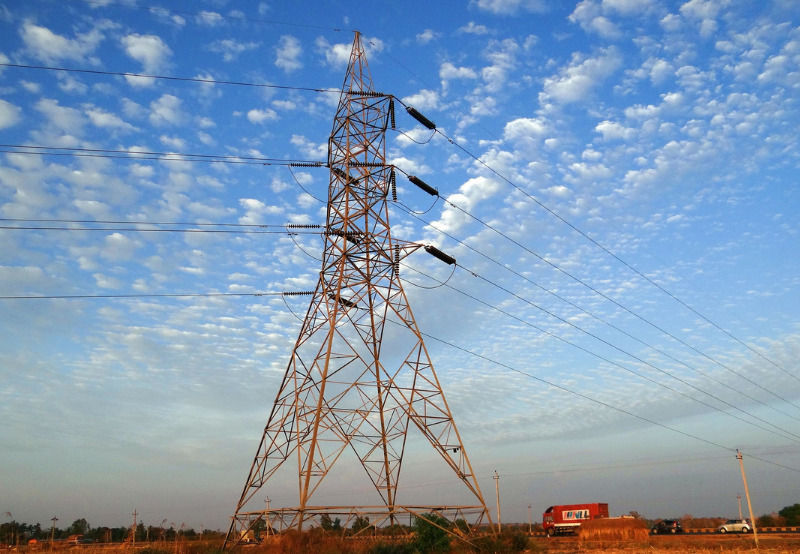
Five years ago, Karnataka's solar conversations centered on rooftop installations and power purchase agreements (PPAs). Industrial leaders asked: 'Can solar reduce my energy costs?' and 'Will the grid accept third-party power?' Today, those questions have evolved. Karnataka has emerged as India's 3rd largest solar state, with 145+ MW operational capacity across Davanagere, Chitradurga, Bellary, Raichur, and Haveri. But the real transformation isn't just megawatts added—it's how industries are acquiring solar. The shift from leasing power to owning energy infrastructure is fundamentally changing the value equation.
THE FORCES RESHAPING KARNATAKA'S SOLAR ECOSYSTEM
Karnataka's industrial energy demand is projected to grow 8-10% annually through 2030, driven by expansion in steel, textiles, aerospace, and manufacturing. However, three forces are converging to make traditional rooftop and PPA models insufficient for long-term competitiveness:
- Energy Cost Volatility: Grid tariffs have risen 7-9% annually over the past decade. Industries locked into long-term PPAs face escalation clauses, while rooftop owners remain vulnerable to policy changes affecting net metering and open access.
- Capital Allocation Strategy: Modern CFOs view energy infrastructure as a strategic asset class—not just a cost center. Solar parks with complete land ownership offer bankable, resalable assets that appear on balance sheets, unlike leased rooftop systems or PPA contracts.
- Grid Infrastructure Maturity: Karnataka's 11/33kV and 11/66kV substation network across Davanagere, Chitradurga, and Bellary is now robust enough to support distributed 1-8 MW solar park clusters. This decentralized model reduces transmission losses and offers manufacturers plot-level ownership within industrial corridors.
THE INSTITUTIONAL SOLAR POWER PLANT MODEL: HOW IT WORKS
Dexler Energy's ownership framework explained
Unlike traditional rooftop or utility-scale PPAs, institutional solar power plants offer industrial clients a unique value proposition: complete land + asset ownership with professional 25-year O&M management.
- Phase 1: Plot Selection & Booking (Day 1-15): Clients choose 1-8 MW plots within Dexler's Grade-A solar parks across Karnataka. Each park is pre-vetted for 11/33kV or 11/66kV substation proximity (< 2 km), clear title, and high solar irradiance.
- Phase 2: Legal Ownership Transfer (Day 15-30): Unlike PPAs where you lease power, direct solar power plant ownership means a registered Sale Deed in your company's name, 7/12 extract, and 100% asset ownership (bankable and resalable).
- Phase 3: Turnkey Project Execution (Day 30-120): Dexler handles complete engineering, procurement, and construction using Tier-1 panels and inverters, managing CEIG approvals and grid synchronization end-to-end.
- Phase 4: 25-Year Managed Operations (Day 120 onwards): Dexler manages O&M for 25 years with a guaranteed uptime of 99%+. You receive passive income: 10-12% annual returns.
COMPARING MODELS: WHICH WINS OVER 25 YEARS?
| Feature | ROOFTOP PPA | ROOFTOP OWNERSHIP | SOLAR PARK OWNERSHIP (DEXLER) |
|---|---|---|---|
| Upfront Cost | ₹0 (Zero capex) | ₹4-5 Cr (for 1 MW) | ₹6-8 Cr (for 1 MW, including land) |
| Ownership | No (lease contract) | Yes (tied to building) | Yes (land + asset, independent) |
| Asset Liquidity | Zero (can't resell) | Low (building-dependent) | High (resell anytime, no penalty) |
| 25-Year Returns | Savings only (~₹3-4 Cr) | 5-7 year payback, then savings | 10-12% annual yield (~₹15 Cr wealth) |
| O&M Responsibility | Vendor manages | Your responsibility (Year 6+) | Dexler manages (25 years guaranteed) |
| Resale Value | None | Limited | Full market value (asset appreciates) |
| Balance Sheet | Off-balance (opex) | On-balance (depreciating) | On-balance (appreciating) |
KEY INSIGHT: THE 25-YEAR WEALTH ENGINE
- Over 25 years, solar park ownership delivers 3-4x more wealth than rooftop PPAs.
- Offers superior liquidity with independent asset resale potential.
- Zero O&M burden on the industrial owner.
- Complete insulation from building-level operational changes.
INDUSTRIAL DECARBONIZATION: SOLAR AS A COMPETITIVE ADVANTAGE
Global supply chains are demanding carbon accountability. Manufacturers face pressure from Scope 2 emissions reporting and customer ESG mandates. Owning solar parks allows manufacturers to report 100% clean energy usage (not leased, owned), reduce Scope 2 emissions by 80-90%, and market products as carbon-neutral to global buyers like Walmart or Amazon.
HOW DEXLER ENERGY LEADS KARNATAKA'S INSTITUTIONAL SOLAR POWER PLANT TRANSITION
Dexler Energy's evolution mirrors Karnataka's solar transformation. We treat solar park ownership like institutional real estate—predictable, transparent, and professionally managed.
- 170 MW operational capacity delivered across the state.
- 8 solar parks operational across 5 high-yield Karnataka districts.
- 1000 acres of land acquired, developed, and registered for clients.
- 99% average plant uptime via institutional-grade O&M.
- 45+ industrial clients across steel, textile, and manufacturing sectors.
THE PATH FORWARD: INSTITUTIONAL SOLAR POWER PLANT OWNERSHIP AT SCALE
By 2030, the benchmark for industrial energy won't be 'grid-tied' or 'rooftop-only'—it will be 'asset-backed.' As Karnataka's grid matures, the companies that own their generation infrastructure will possess the ultimate competitive moat: energy cost immunity. Dexler Energy remains committed to leading this shift, providing the engineering rigor and institutional framework needed for India's industries to own their power and their future.
Ready to Partner with Karnataka's #1 Solar Developing Company?
Join the league of industrial leaders securing their future with Dexler Energy.